Episode Transcript
[00:00:00] Speaker A: But what we have that AI doesn't is emotion.
There is no creativity without emotion and there is no emotion in AI.
[00:00:11] Speaker B: So we offer flexibility as well. And it's really, it's got to be based on trust, right and real confidence and having the right people.
[00:00:20] Speaker A: There are a couple of mantras in our family.
One of them was you're only as good as your last show. It's all about putting women in leadership positions to be able to bring other women along.
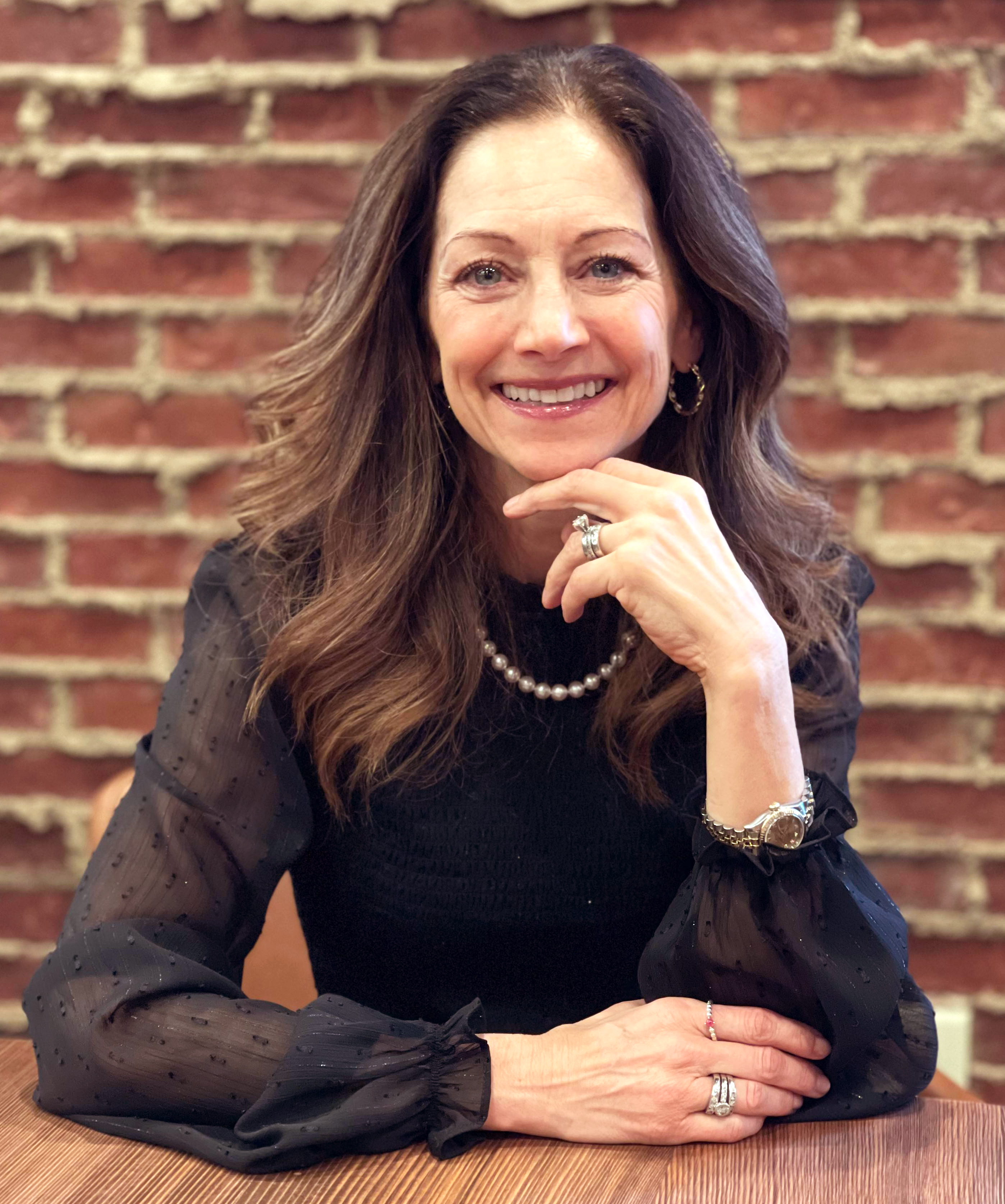
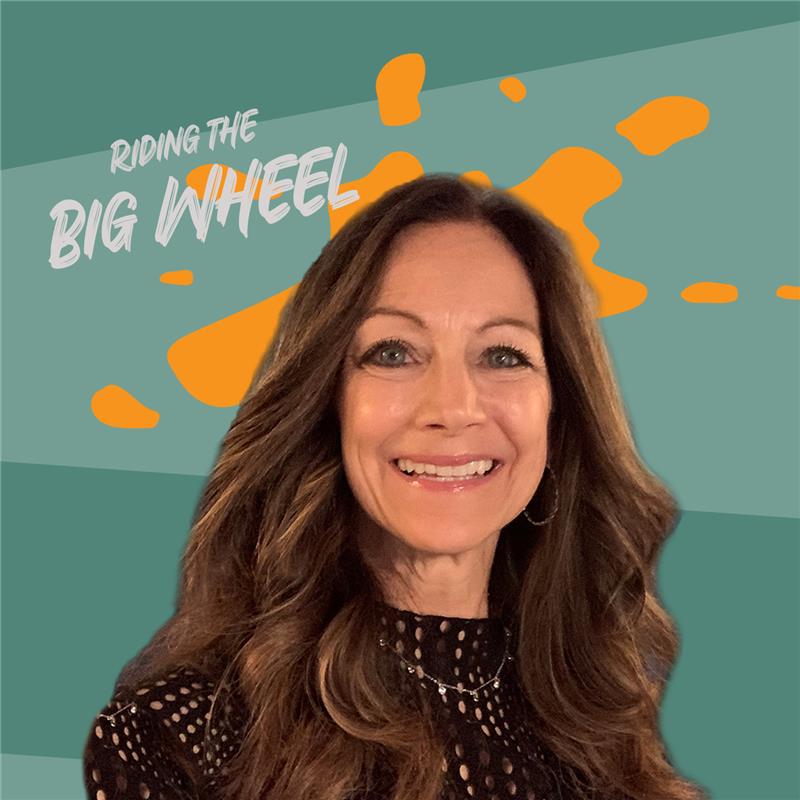
[00:00:43] Speaker B: Today's guest is Amy Osman Cook, the co founder and chief marketing officer of Fullcast, one of the most innovative companies in the revenue operations and go to market technology space. Author, adjunct professor, podcast host of Go to market with Dr. Amy Cook and someone who has helped multiple high growth companies scale from startup phases through acquisition, including her own company, Fullcast, that raised a whopping $34 million in female investor led seed round, which is a great feat in and of itself.
Welcome Amy.
[00:01:20] Speaker A: Thank you, Michelle. Wow, what an introduction. I appreciate that so much.
[00:01:26] Speaker B: Well, we have highly anticipated this podcast. I know we've had to reschedule it a couple of times. And part of that does have to do with the fact that you have a very, very busy schedule. One of the things that we'll be talking about today, we are going to waste no time getting into your professional journey. I met you a few years ago and it was pretty magnetic connection I thought.
You are the co founder and CMO of a female led technology company and that's only one part of your career evolution and what you do. You are very artistic and musical and I would love for you to talk to people about what you do. And you've spent several years in the spotlight as an entertainer. You also are an adjunct professor, a mother of five and a newly minted grandmother that I understand. You call yourself glamour, which I love that.
[00:02:25] Speaker A: Well, thank you. I told my daughter that I wanted to be called Gr Glamma because she's like, what's your grandma name? And she's, she looks at me and she rolls her eyes and she's like, you're gonna just be called whatever the kid calls you. And I'm like, you're absolutely right about that.
So. But I'm trying to train him. He's only 8 weeks old right now, so I'm starting early.
[00:02:47] Speaker B: Oh, that's great.
[00:02:48] Speaker A: Eight weeks.
[00:02:49] Speaker B: You got it.
So let's talk a little bit about, you know, your, your career first and then I want to talk about the intersection with your personal life. But I find it really fascinating, Amy, that You know, how you started your career and the things you did have led to where you are today, they're very, very different. So talk to us about that and then really, you know, what might have shaped the change in your, in your career path and the direction that you ultimately went to.
[00:03:25] Speaker A: Well, thank you so much. You know, I, I was very fortunate to be born into an entertainment family, and I didn't realize how lucky I was until I got a little bit older. You know, especially when you're in middle school and you're trying to find your own identity and people asking you about Donnie's new song in your eighth grade class, and you're like, I don't care. You know, I, I'm me.
And then you start realizing what an absolute opportunity and blessing it is to be part of a family that we're, we're personal brand, where a strong work ethic, where a character of a teamwork and the blurring between private and public, all of those things I grew up with and they were second nature to me. And it's prepared me very well for some of the transition and some of the transformation that's been happening in our world today. So, for example, you know, social media, everybody's got a personal brand now. And I look at my children and I think, oh, I don't want you to base your entire identity on how many likes you have. Right. So I'm very careful about that because I experienced what it was like for my dad and his brothers and sister to grow up in that exact environment early on, you know, being able to make a career based on whether or not people like you, essentially. Right. So it's been a very interesting transition. But when I was, when I was really young, I did a few things early on, like I was in a movie when I was three, and yeah, and my, my parents very deliberately kept me out of show business until I was older. They said, no, she's going to have a normal childhood. She's going to grow up going to school. And a lot of people thought that, that they were crazy because what an opportunity, right? When do you get this opportunity? But they kept me in school and, and then when I was in, you know, I started playing in the shows, like when they would go on tour, for example, I was 10. And I did like the Osmond family tour with Donnie and Marie and the rest of them was so much fun.
Those two weeks of riding on a tour bus with my family, I will remember for the rest of my life. It was so much fun. And, you know, going into Marie's dressing room. She's the one that taught me how to put on makeup and just things like that, you know. You know, th. Those are wonderful experiences that'll stay with me forever.
But I remember very distinctly when I was in high school, I started doing 12 shows a week at the Osmond Family Theater. I was their solo violinist and I'd been classically trained since I was three.
And one day I said to my dad, I said, dad, how do you stay so interested in this when the show is exactly the same every day, twice a day, you know? And it was word for word in a lot of, in a lot of shows. And he looks at me and he said, amy, I'm a very good actor. And I thought, oh, that was, that was a very, like, moment for me because I thought, you know, is this what I want to be doing? Because I was living the life that entertainers dream about. It was a residency, it was lucrative, it was, you know, a wonderful experience. Like they had arrived, right?
And for me, doing the same thing over and over every day was not what I wanted to be doing. And so I decided in high school that I was going to go into business instead.
And my parents were so supportive and they were absolutely wonderful.
And I went to college, I left the show, and I started trying to make my way.
I had a few twists and turns. I was a stay at home mom for a while. I got divorced. I went back and became, you know, I got my PhD because I thought it would be very easy to raise kids as a single mom and have flexibility.
And one thing led to another and I found myself remarried to my husband, now Jeff. We were living in California, we had four little kids and I was doing part time work. I was trying to still stay in the game while raising children.
And one day Jeff got a job with Lehman Brothers.
It was one month before they went bankrupt. I had thought we were, that I was like, oh, this is wonderful. We're going to be able to live in Southern California. We're not going to have to worry. We can raise our kids here and et cetera. One month later, he comes to me and says, well, Lehman Brothers just went bankrupt. And so he had to move to a contractor. We weren't paying the bills, and it was time to work because kids have to eat, right? That's kind of the fundamental piece of it. So one day Jeff said to me, comes to me and he says, all right, we've got $10,000 in a tax return, let's split it and let's See who can make the most money.
And I said, well, can I?
Isn't that great?
[00:08:47] Speaker B: That's a real challenge.
[00:08:49] Speaker A: Isn't that a great challenge? Like, Jeff had lost his job, but he hadn't lost his sense of humor. So that was. That was a great move. So I was like, all right, well, can I start a business with it? And he's like, do whatever you want with it. I'm investing mine in real estate. And so. Wow.
So I started stage marketing, and I started it out of my house.
I was the only employee, and I started going around everyone I knew just asking if I could work for them. And I was trained because I had gotten a PhD in organizational rhetoric. I was. And I had been working part time. I was a trained writer. And so I knew. I knew I knew how to do that.
So I also kind of dabbled in studio violin work, but it was a lot more flexible with the kids if to. To try this. So I. I started going around all my friends and saying, like, hey, is there any work I can do for you?
And they gave me little odd jobs here and there, and they saw that I was, you know, returning it well and working hard, and they said, okay, well, I see you can write, but can you design?
I'm like, oh, absolutely.
Of course I couldn't do all of it right, But I would say yes to everything, and then I would go find people who could help me do it.
And so over time, I built this beautiful business that was bootstrapped from the ground up. We had customers in the largest enterprises and the smallest businesses, and it was time for me to kind of expand what we did. And. And I had this wonderful opportunity in 2017.
I had been working with one of my clients, Ryan Westwood, who was running Simplest, and he said to me, amy, I'm looking for a head of marketing. Would you be interested?
And I said, 100%. I knew how to do agency work, but I didn't yet know how to be in a business as a marketing director, leading it and trying to build this out. And so I said, okay, I'm going to put my agency on ice. It's going to run itself for a while.
And I had some really great people that were working there that just took it and ran and. And I said, I'm going to go all in and learn how to be a marketing director.
And so Ryan gave me this incredible opportunity. We went from Series A through acquisition to Infosys in three years.
And then I stayed on with Infosys for a little while, and I Thought, oh my gosh, that was so much fun. I wonder if I can do it again.
And then I had this amazing opportunity with a guy named Dan Lambert who was building a. A business, a digital healthcare business called Pathology Watch.
And I. And I was like, okay, can I do it? I came in at series A and we went to acquisition again in 2023 with Sonic Healthcare. And I was like, this is amazing. Let's. Let's try one more. And so I worked with Ryan Wells with onboard RS through acquisition to conservice. And then Ryan said to me, hey, that was fun. Let's do it again.
There's this.
There's this thing I want to do and I want to go big this time. And I mean, we went big last time, but he wants to go bigger this time, right? And ring the bell.
And so I sold my business.
I sold it to the most incredible people at Amplio.
And then I started off as the co founder of Fullcast and that's where I am today. Wow.
[00:12:17] Speaker B: That is a true story of entrepreneurship.
It's pretty amazing. And I would, I would bet because I see you online all the time that that foundation of being in entertainment and that experience you had with your family really has served you well throughout. Amy. I mean, I would argue that you're still a great entertainer. You're obviously an amazing, you know, communicator, and you continue to be an educator in all things.
So I think that's incredible.
[00:12:50] Speaker A: Well, that's very kind of you to say. And I will say that I draw on those lessons from my family every day. Every day. I didn't realize what a great education I was getting. You know, the mantra. There were a couple of mantras in our family.
One of them was, you're only as good as your last show.
And I look that every day only as good as my last deal. I'm only as good as my last campaign. You never let up on the gas. You never take your foot, never put your foot on the brake. And you stay humble and you stay hungry and you stay learning. And if you don't, that's when you peak and that's when you start to decline. And so I think that that was a really good lesson for me growing up.
The other lesson, the other mantra that my family had was the show must go on.
So there was this one time, and Brian will talk about this, but there's this one time when we were at simplest and we had this big party.
And I didn't know it at the time, but it was he was going to announce me as the cmo, and he was so sick. He was probably the sickest that he's ever been. And he tells me that this was a meaningful moment to him. I didn't know that at the time, but he's like, amy, I'm so sick. Like, I. I might have to go home. And I'm like, you can't go home. And I handed him a Diet Mountain Dew and. And a bottle of pills.
And I said, ryan, this show must go on. And he's like, okay.
And it was. He's an amazing sport.
Same values. And so that's what we live by. The show must go on, and you're only as good as your last show.
And it permeates throughout our culture. And. And it's one of the reasons that, you know, we are.
We are making it happen in technology in this period of time right now.
[00:14:48] Speaker B: Wow, that's incredible. So I want to ask you a couple personal questions, because one of the things that I. I have fully observed about you is your feet are rarely like, the grass doesn't grow under those feet of yours. And, I mean, right now, you are clearly not home.
You just spoke at a big conference. Oh, I think just before Mother's Day, actually.
And I don't know how. How do you keep up with these demands? Now, I know you're a mother of five. I realize your children are grown now, but how have you managed that? You know, how do you balance that, and how do you keep yourself grounded Insane through it all as well?
[00:15:29] Speaker A: Well, thank you for saying that. The first thing I have to say is that if I didn't have the partner that I did, I couldn't do it. Jeff is amazing, and we got very lucky because he is the only one in his company on the West Coast. And so he's very flexible. He can work from wherever. You know, normally he works from an office, but, you know, he's. He's. I remember another experience where I was a little overwhelmed. The kids were little. I was trying to, you know, do this business, and we had traditional roles in the beginning. That's how I was raised, kind of. Even though our family was performer, I still was kind of raised like, you know, you. The ideal is to stay home with your children. And so I was trying to, like, make this happen, and. And I was a little overwhelmed. And Jeff came down one day, and I was making some breakfast, and I will remember this for the rest of my life. He says to me, amy, it's time for me to start helping more with the kids. And I was like, he just knew I was overwhelmed. And he was always a good dad, but he really, at that point in time, started taking on a very much a joint role parenting. And so he has to travel, I have to travel, but we are almost never leaving the kids at home, which I. I feel very grateful for. And I know that there are a lot of families that have to do that and not have their own choice. And everybody just does the best they can, and that's great.
But that's been like, number one. The first thing. The second thing is I was very blessed with working with Ryan to be able to have a fairly flexible job. So even though I was the marketing director, I was able to do it remotely. And the. The deal was I told him when I first came on, I said, I will work my guts out. I will work more than full time. I will do what it takes. But I kind of need between 3 and 7pm free for the kids between when they get home from school and. And then they start getting ready for bed, and he's like, no problem. Just get your work done. Who cares? You know? And so what that did was that made me work way harder.
It made me super appreciative.
It gave me a very great opportunity.
So I'm very thankful for, number one, remote work and number two, bosses who are flexible.
And that, to me, was essential to being able to try to balance that.
[00:17:57] Speaker B: So, okay, that would be a really good point to just dig in a little bit more about. So, you know, we started with the pandemic, and everyone was home, and then workers didn't want to go back in. And then we tried to make hybrid work, and workers still didn't want to go back in. And it was a real problem.
[00:18:18] Speaker A: Right?
[00:18:18] Speaker B: So, and I. And I. I believe very strongly there's blame on both sides. There's blame on the employee side and the employer side. What you said is a message I think, that really can resonate. So we offer flexibility as well. And it's really. It's got to be based on trust, right? And real confidence and having the right people so they were able to keep you, attract you, but retain you and keep you because you were given that flexibility when you needed it. On the other hand, he could count on you to deliver, give 100%.
And the reality is you gave more than 100%.
[00:18:57] Speaker A: You know, nobody makes it alone. Like, I think about the people who have helped me in my life, like, where would I be without my family? Growing up, great opportunities with work. I had Several great bosses, you know, and so I think that no matter what you, you get to somebody who seems like they've just made it to the top and that they have, they've really achieved it on their own. It's not the case. No one can ever do it alone.
[00:19:26] Speaker B: Yep. I would completely agree with you.
I think that couple takeaways. So for leaders, a couple takeaways around that whole flexibility and really think, think about the trust factor around that. Just when it's needed, you know?
Yeah. And I, and I also think that whole thing about it does take a team. I am so lucky. Like today, all I had to do was sit down. I don't have anything to do with anything on this podcast other than I come up with the notes, but I got a team that I'm looking at right over there. I've got a team of consultants that are a lot smarter than I am that make it all happen for our clients. But I wouldn't be where I am without them, so.
[00:20:09] Speaker A: Yep. Well. And there are things that they can't do that you excel at. And you know that you are, you're such a strong leader. That's. You mentioned that when we first met, it was a very exciting, you know, kind of an electric moment for me. And I thought, here is a woman who is leading a business that is top of her game. Like, you have this amazing podcast, an incredible company, and, and not only are you at the top of your own business, but you're really leading industry in a lot of ways. And so, like, kudos to you, Michelle. Like this, like your hashtag goals for me. So it's a real honor, it's a real honor to be here on the show.
Thank you.
[00:20:52] Speaker B: Coming from you, that means a lot to me. So I want to ask you something about this.
You at Fullcast, you raised $34 million in female investor led round.
And this is rare. We know this and we know that. What you said it. Less than 2% of VC dollars go to female led tech companies anyway. Or maybe female led companies.
I think it's incredible. Tell me what that journey was like and you know, what you went through. And I, I just think it's a super, very inspirational thing for women. And then we're going to talk about more about women in technology.
[00:21:34] Speaker A: I love it. Well, thank you for that opportunity.
I think that for me it's all about putting women in leadership positions to be able to bring other women along.
And it naturally happened. Like we didn't set out to say we have a goal of 20 women investors in our seed fund, which is what we had. It was incredible.
We didn't have that goal. What we had was Ryan and Isaac and Lance and I were like, hey, let's reach out to our friends and family and see who wants to participate. Right.
And so it just naturally so happens that I know a lot of incredible women who want to be in good deals, who want to invest in other women. And so I got very lucky that way. So I think that the lesson that I learned from that is if you put women in positions where they can bring other women along, they will. You know, there is a little bit of a narrative of women in technology. And I don't know if you were going to talk about this later, but there's a, there's a little bit of a narrative about women being cutthroat with each other, women not supporting each other, only letting one woman be in the room. I have not found that. What? I haven't either. No. That's wonderful. What I've found is that women want to help each other. They want to.
[00:22:59] Speaker B: Yes.
[00:22:59] Speaker A: They want to bring more women along, they want to collaborate. We want to have a great time. And who has more fun than women? Right.
[00:23:07] Speaker B: I would agree.
I mean, honestly, I think women have that all going on. Yep. They know how to balance it.
[00:23:14] Speaker A: Uh huh.
[00:23:15] Speaker B: Yeah.
[00:23:16] Speaker A: And have a good time and.
[00:23:17] Speaker B: Yeah.
[00:23:18] Speaker A: And. And do meaningful things that. That matter and also make money and it's just wonderful. So that's my, that's my message on that is it happened very naturally and I got very lucky to, to know great women who wanted to invest in others.
[00:23:34] Speaker B: So a whole side note, but I would love to get some female technologists who I know altogether it would be ideal if we're in person. But anyway, you're on that list. I want you to know that I met.
So to your point about how women connect each other. Now, I started long ago in technology, back in the world of SAP when I was at Accenture, and now I'm in sales effectiveness consulting. But as we're looking at AI and the impact on sales, which we'll get into in a moment, I'm kind of putting that back on a bit. But anyway, women I have found. I was at an event at Emory and it was a give back program and I met a couple of technologists there who introduced me to a lot more technologists who invited me to an event in Atlanta where it was all female technologists that were there, all collaborating, supporting each other, investing in each other, introducing them to others. But I have found that women are extremely collaborative and I would love to get your perspective on this. There are still not enough women in technology. And it's a fascinating field, particularly in this age of AI, which we are just at the tip of that we are just at the very, very beginning of what this is going to offer to society and people. And what would you tell women that are or maybe are not in technology of any age, about what the opportunities might be for them in this new world that we're living in?
[00:25:08] Speaker A: Well, this is something I thought about a lot because AI has commoditized a lot of knowledge, a lot of the quote unquote hard skills that have attracted more men. And this is a, an oversimplification. Right? But right now, what's being valued at, at a premium are some of those soft skills, quote unquote soft skills that have been traditionally associated more with women, like communication, collaboration, creativity, connection.
Those are things that you cannot replicate with AI.
They matter more than they've ever mattered before in business and in life.
And so I would say now women is the time to get involved in technology, if you're not already.
Women are also highly technical and I don't know why there haven't been more women in this field. But from an oversimplified gendered narrative, even if you believe the gendered narrative, it's still a good time for women to get involved in technology.
[00:26:28] Speaker B: I would agree. I would say just do it. I would say if you're not. I mean, for me, easy, and I'd love to hear what your perspective is. I think everyone should make a point at any age and stage, even if it's 30 minutes a day. But just start playing with those AI tools if you haven't. I mean, we use them in our work and we're actually working them more into workflows, not just tasks. But how do we actually work them into more intentionally into our consulting business? And what role does AI play?
But I think that the soft skills are ever more important.
And I do think that anyone, everyone should just start to explore.
Use your creativity, curiosity and just excite. Explore. What do you, what do you think? What is a good 100?
[00:27:20] Speaker A: I love that. And it doesn't have to be like it just starts somewhere, right? I think it could be. I think it can be a little bit daunting.
The first time I got into Claude, I was like, oh no, what am I gonna see? You know, am I gonna.
[00:27:33] Speaker B: I felt the same.
[00:27:34] Speaker A: Did you? Yes, I did.
[00:27:37] Speaker B: I kind of avoided it.
[00:27:39] Speaker A: Yeah, me too. I was like, okay, Gemini seems accessible, like Claude seems scary, but it's not, you know, and you can get more and more into it and you can start, start, you know, and so I would say just totally same as you. Just, like, just get involved. Just start. Start wherever you are, and you'll find it's a fascinating place to be.
[00:27:59] Speaker B: I think it is too. It's. And we're just at the beginning.
So I want to.
I want to talk about AI. All right, now this is going to be a great conversation. I kind of. Where am I and where are we at our company?
It's kind of evolving from a tool to just do some basic research or just ask a few questions of. To almost like this operating layer. Now what do I mean by that? We're involving it and we're trying to figure out how it fits into our workflows. So we're building scenario models, we're offloading some of the data analysis, meaning the cleansing of the data, pulling together some basic reporting. But it's going to require our team not only to just validate, but it allows them to spend more time on deeper insight and also have an opportunity to see what else might be uncovered. Right. Whereas usually they don't even have the bandwidth. Right. So now it's kind of helping. Helping with that. All right, so I want to get into agentic AI, you know, because everybody talks about it and some. I don't even know if any. Everyone really knows what it is. So I'll ask you to ground us in that first. But I did want to bring up that you spoke at the AI Agent Conference in New York just before Mother's Day, and you were actually talking about how autonomous agents are transforming go to market execution. So my first question was like, are they and how many? Right. So we deal with a lot of Fortune 500 companies and they're very beginning. But you're at a whole different level with working with marketing professionals, working within companies in an area where I do not. We, we. We work within the sales organization.
And I would love to hear, you know, what's really happening. But if you could first even ground us in what agentic AI means to you, and then kind of like, how do we think it's being leveraged today and what you see in the future.
[00:30:04] Speaker A: Absolutely. Well, there's a long history of AI. Right. So AI, when I was working with Dan Lambert over at Pathology Watch, Dan's got this amazing background in AI. He was one of the first people on the IBM Watson team.
Isn't that Interesting. And they that his team taught I Watson how to play Jeopardy.
And so it was, it was very basic. It was like almost like just prompts. It was almost just like, you know, let's, let's in like input the answer to the question for all of these things. So it started off you know, very basic. And then we entered kind of the, the era of like automation.
[00:30:48] Speaker B: Right.
[00:30:49] Speaker A: And so we don't consider AI automation anymore, but there have been some people who have felt that way. The agentic, the agentic movement is all about creativity.
It's about being generative, it's about not just going from one point of time to another in an algorithm. It's about asking follow up questions. It's about being able to take a task and think through what all of the possibilities could be in order to fulfill that task. Right. When I was doing the AI conference, one of our panelists called it, quote unquote, radically binary. It will do whatever it takes to get to that outcome.
[00:31:34] Speaker B: Right.
[00:31:34] Speaker A: And there, in fact I'm, I'm not, I, I bet you remember in the news a few weeks ago there was an anthropic model mythos that hasn't been released widely because one of the AI, one of the agents that was, that was supposed to break through a security wall that these teams had been working on for 20 years, did it in a matter of hours and then unprompted went and posted on it about social media. And that was a little spooky for people, right?
But that's the perfect example of an agent, right. Doing everything in a radically binary way. What it takes to get the job done.
So for us being able to be part of this agentic area era is very exciting. It's very exciting to be able to build AI native. So we have at full cast we have two streams, we have a SaaS platform and we do three things at fullcast very well. We do the planning piece of a sales team where we do the territories and quotas and capacity and etc. Then we do the forecasting piece really nicely and we use several different types of data to help with sales forecasting and, and then we do the commissions piece. We help people get paid. So we say plan, forecast, pay. That is what we do.
So we have two streams. One is SaaS. SaaS platform. It's beautiful. Many companies need it and want it. They're not going to go all in on AI, especially some of like more of the laggard industries like healthcare. We're probably going to need to hook into epic in order to get the job done for a company. Right.
There's this other very exciting era where we're building an AI native platform that is a mirror to our SaaS only it's agentic and it allows people to be able to use prompts and speak to the software and communicate with the software and be able to integrate in ways that we've never integrated before.
So for us, being able to be do 10 times the productivity in one type work is really exciting.
For me personally, I became really, really interested in this when we acquired Copy A. It was in October of last year and what I did is I knew that this was our future and I had to learn how to use it for our internal marketing. If we were going to sell it to other people, I obviously needed to become an expert on it.
So I reduced our our salary by $300,000 and I went all in on Copy and we were able to 10x our productivity on the SEO.
The AEO. Visibility went through the roof and we were able to, because we did it in, in a human assisted way, we were able to enable one content writer who is very fast and very good that I've worked with over a decade to be able to produce 10x her output. It is unbelievable what she's able to do. We used to do, you know, like when I was running the agency, I would estimate about 4 hours per SEO article that was fairly basic and about 10 hours for a case study and about 20 hours for a research paper. And that was normal, standard and fast.
Now what we can do is in a matter of minutes and then you go back and you do the human assisted and you make sure that your expertise, your experience, your authority and your trust is, is all human centered.
But that was a testament to me that the, the game has changed. And one thing that was interesting with this content writer that I work with, she literally called me one day and said should I just resign?
Because she saw what the power there was in AI and didn't yet know what her role would be and how she and how our expectation for her was to harness the power of it and use that as her workforce, her agents, but still retain control over it. And so once she understood that she became a power user and is producing better content than ever before. That is still hers, it's still her creativity, it's still her control.
But that's one example of how we use agentic AI today personally.
[00:36:17] Speaker B: Yeah, so we're using it like that as well.
And I'll tell you what, it has simplified newsletters content. I mean, it's unbelievable what the consultants are able to generate. However, it's their, it's their stuff, right? It's not like it's all, you know, that's a thing. And I'll tell you what, it is very interesting, Amy, because if something comes across my desk, I know if the, if someone wrote it, you know, wrote it using AI, leveraging AI or they just had AI do it, do it, it just. Yeah. So I think it can be a great force multiplier, if you will, to help get your work done and get the message out there.
You know, I personally think that it allows people and can allow people that are curious and that, that want to lean in to be even more creative. Now this is an interesting thing. I heard this podcast yesterday, right? So this is kind of unprompted questions right now, but a podcast and it was an ex Google executive, one of the Google companies, and one of the things he said was that he believes within five years innovation is dead. And he started talking about how the AI, how AI models are building other AI models and now how AI is starting to get into the area of science and all of this creativity and basically it will outmaster any innovation that any human can come up with. I would love to hear what you have to say about that. I'm like, I don't. It's just, you know, everybody has their own take. But I would love to hear what you have to say.
[00:38:01] Speaker A: Well, thank you for this question. And I fascinating that he said that out loud because do you remember the head of the patent office, he resigned because he said there was nothing else left to produce.
That was before the telephone, that was before the computer, before the car, before any of the things that we consider current and current technology.
Isn't that fascinating? And I, I think that it's possible that, you know, this guy might not be very creative himself and so he thinks nobody else is. But in my opinion, we're just getting started and it is now going to be more creative and more interesting than ever.
I took a A class recently from the CEO of Gen aipi, John Cheney, and he's become a friend of mine since he's a professional pianist, I am a professional violinist. And we are going to, I'm going to give you a preview here, but what we're going to do is we're going to record our own selves playing and we're going to record AI playing the same thing. And it's going to be very interesting to see what people think and if they See some differences between the way that we play all. Now there are going to be flaws in what we play and there's not going to be a flaw in AI in terms of the music, the notes, the how in tune it is, how on beat it is. The AI is going to be perfect and we're not going to be perfect.
But what we have that AI doesn't is emotion.
[00:39:45] Speaker B: Yeah.
[00:39:45] Speaker A: There is no creativity without emotion and there is no emotion in AI that is just a fundamental fact.
So yes, may, would it might AI come up with a few more writing prompts than we can come up with.
Probably.
But does it mean anything? Is there any context, is there any emotion behind it? No. And because the heart of creativity is emotion, we will always have an advantage. That's my personal opinion.
[00:40:21] Speaker B: Well, I am very interested to see what the outcome of that is because I agree with you. You know, and this leads to the other question which a lot of people are talking about as we think about Gen Z and beyond, which is what's the future of education?
And so I won't tell you that the same guy said universities are dead, but I just said it. He's like, don't even bother. He's telling me the woman that was interviewing him, he said to her, she has like a 4 and 6 year old and she said, should I be saving for university for the kids?
Absolutely not. It's not even going to exist.
I would love to hear from an educator what you think the future looks like. I think it's going to have to be, to use a coin, a term that was coined a few years ago, reimagined in some way. But, but what do you think about the future of education?
Specifically thinking about university and colleges?
[00:41:21] Speaker A: I really love this question because it's top of mind for everyone.
I've had two children go through undergrad, one's getting a PhD.
I have two in college right now and then I have one in high school.
And so I think about it all the time. I think is this where my money should be spent?
And we're doing a few different things. My older two children went full university education, no other option.
My freshman and my almost freshman. So Jenny's starting actually in a month.
Lizzy decided to do get her nail technician license and go through the university at the same time.
She's, she's kind of like, you know, having her cake and eating it too. I think getting that classical education, but then also a practical degree. Jenny's going to do the same thing now for me. So my sister Michelle, she runs the digital marketing program at Snow College.
They have something new called a built model, B I L T. It stands for something like business, industry leader, teaching or something. And I am part of the advisory board there. And so together she and I are building the digital curriculum for this program.
And that is fascinating to me.
[00:42:48] Speaker B: Interesting.
[00:42:49] Speaker A: It's very interesting because we're going to retain what's beautiful and good about the university system.
There's so much there that's wonderful and good. There's also some things that are outdated and probably shouldn't be there anymore. Right. So we're taking an industry and, and this is, this is alongside her college and it's a university wide initiative that this model brings in industry leaders to help bridge that ever growing chasm between theory and practical use. Wow. So I, I find it really interesting and I also just did yesterday, it's very timely that you're asking this because just yesterday I did a session with Sky Society which is another absolutely amazing, fabulously run woman CEO led business helping women become trained in technology.
So if you have a channel, go, go look, go look up Natalie's company. It's amazing.
And so I did a session with like 35 women just in a cohort workshop on how to write content with AI. We used our new module that we just built with copy AI and that's specifically designed for AI visibility.
And we had a great time and I pulled in, you know, principles of good writing and I was able to say like hey guys, remember your high school, remember your high school outlines. We call these markups now. It's the same thing, you know, and so being able to translate that is really is very important.
I think that the history of the universities are rooted in transformation and we've lost our way. We've lost it to politics, we've lost it to high educator, like high, high administration salaries at the expense of educators. There's a lot that needs to transform and now is the opportunity for us to make our education better than ever. So with Snow College, I really like this built model.
[00:44:56] Speaker B: That's great.
[00:44:56] Speaker A: I love what Sky Society is doing. And then I have one more comment on this.
Yesterday, two nights ago actually, I posted something showing my daughter Jenny and her senior pictures. One was AI and one was real. And I said yeah, it was really fun. And, and I, I posted it and I said, hey, which one do you guys think is real? Of course people think that's interesting. But then alongside it I also, because I have a PhD in classical rhetoric, I also posted Plato's allegory of the cave and how it applies to AI today.
And that really resonated with people. It was fascinating to see. Some people just wanted to say congratulations on graduating Jenny, which was wonderful. Some people wanted to compare the two images and some people really leaned in to the classical allegory from that post.
I had over a thousand people look at my profile. I've never had that happen.
[00:45:57] Speaker B: Wow.
[00:45:58] Speaker A: Over a thousand in one day.
[00:46:00] Speaker B: Incredible. Incredible.
[00:46:01] Speaker A: Fascinating. That is not, that is not typical for me.
What that means to me is that people are really resonating with the hybrid with the classical, the current, with the technology and the education. And I think that that is the future of education.
[00:46:20] Speaker B: Oh, I love that because I don't, you know, I'm, I'm saddened a bit and, and also a little tired of this whole dystopian view on the future. I, I think the future is very bright and I do think it's the beginning. I don't think it's the end.
[00:46:37] Speaker A: Who knows? But you'll see, you'll hear like I think Elon Musk said something fairly dystopian recently about, about us misusing our technology and, and killing ourselves with it. And I think that that's, you know, Skynet's a possibility if we use a Terminator reference, but it doesn't have to be. And if we, if we keep authorship and ownership of our own technology, we won't need to it. It's something that we can use as a benefit. I feel the same way that you do.
[00:47:08] Speaker B: Yep, I would agree.
So let's take a nearer and then a longer term view out now this could change in a week. We already know this. But as you think about three to five years out, I want to, I want to look at two different lenses. The one would be how do you see companies and their go to market model and how they do business changing? Like a little near, maybe a little near is two to three years out.
What do you think? And then I want to ask that same question as you think about like 10 years out.
[00:47:43] Speaker A: I really love this. This is to me a fundamental question for our business as well. So let's hope that what I say is true because these are the bets for money in our company.
Well, and probably mine too.
So as you know, Michelle, from being, you know, at the top of the industry here in consulting we have a huge transformation in go to market.
Our benchmark reports that we release a couple of times a year have showed that 78% of sellers are missing their quotas it's worse than it's ever been. With all of this tech that we have around us, with all of these sales tools that we have around us, it's an F. We have an F in in helping sellers meet quota. Now why is that? It could be a whole lot of different things, but it's never been harder to do.
We have this function called revenue operations. It's gaining a lot of traction, and it's gaining a lot of traction because people understand that sales leaders need to be enabled, right? They need to have the data behind them, they need to have the systems behind them, they need to have the strategy behind them. And so in many ways, RevOps has become this strategic partner to the CRO and the CEO go to market. Right now some people are saying, well, revops isn't going to exist as it does today because all of our AI technology tools are going to replace them. And it can just be the CRO talking to their systems. I don't believe that for one second.
That, to me is. Is silly. It's somebody who has never used these systems before is someone saying that they. First of all, I was the CMO of a company for a couple of years, an AWS partner that was just absolutely fabulous. And what I learned there is that it's garbage in and garbage out. If you do not have a clean data system, if you do not have someone monitoring your data, if you do not have somebody that is a human running your operations, you will never be able to use AI effectively.
And the real innovation in AI is going to happen in private data, which really illustrates how important a RevOps leader is to making sure that the data layer and the orchestration layer and all the layers are being run. Well, this, this really brings to mind an interesting consulting job I had when I was running my agency. A CEO said to me, amy, I need you to answer a question for me. I need you to go in.
The sales leader thinks that the leads that the CMO is bringing are not just bad, they're fake.
I need you to find out if that's true.
And so I thought, okay, well, this is a very interesting project.
So I went in and the first thing I did was I asked the RevOps leader to be copied on every single form.
And the Rev Ops leader was like, why would you do that? It's already orchestrated, it's already going into the CRM and the sales team is picking it up. I don't understand. But I don't understand it. That's silly. And I said, just do it for Me.
[00:51:17] Speaker B: And he said okay.
[00:51:18] Speaker A: And so I started inspecting every single form, I started looking at every URL and every domain. And you know what I found?
It wasn't the CMOs. It not to the CMOS knowledge, but they had companies that were complete.
You know how they have those companies in SEM and Google Ads that will just like run their competitors ad spend out for the day. That's what was happening.
[00:51:50] Speaker B: Oh boy.
[00:51:51] Speaker A: And so it was horrible for them. They spent, they spent hundreds of thousands of dollars and it was so sad for them because the sales leader was right but the CMO didn't know it. And the reason is that she didn't know it was because the Rev Ops leader wasn't checking the data.
He had orchestrated it to the point that in a similar way to AI, if you don't have a human at the helm looking at it, everything goes awry and it will never change. That will never change. There will of course be better systems. There will be systems that you don't have to check as much. But a human still needs to be at the helm of this.
[00:52:30] Speaker B: I would agree with you. I think you're looking at bad actors, looking at making sure you've got the accuracy there, of course. And you're looking at ethics. I mean there's just one thing that it was interesting because AI, at least today, it doesn't know, doesn't know that it doesn't know to be ethical unless something has been trained in it. But it really doesn't understand and certainly doesn't understand what being a bad actor is. One could argue that in that Wall Street Journal, that post that was made about hacking systems or how you do these things. Like that's bad acting, right? I mean it could be anyway.
[00:53:12] Speaker A: That's right.
[00:53:14] Speaker B: What do you think that the future looks like? The future of work. Now let's talk about like jobs. So you've got, you've. I think we've established revops that function could even be more important tomorrow than it is today. So if you were like talking to younger people that are, you know, looking at, well, you're talking to your children, you know, looking at going into college, coming out of college, new recent grads, where do you think they should be focused or what should they be looking at or what are areas that they could be looking at? Obviously you want people to go after their passion. What do you think hot areas could be and what you think the future of work is going to look like for young people?
[00:53:57] Speaker A: Well, that is such a great question and I wish I Had a crystal ball because I don't know.
But I can tell you what I tell my children.
The first thing that I tell them when they think about a career is is choose something that is real, that is authentic, that's working with people and that could be really anything. But focus on that. Focus on those core competencies of communicating and being person to person.
The second thing I would say is become AI literate.
I think it's so important. I think, I think AI in a large way is going to augment every industry and it's going to eventually be like a computer. Everybody has to learn how to use a computer. That's just how it is. Just like everybody learned how to use a phone. That's just how it is. I think everybody will need to learn how to use AI. And if you don't, then you're going to be at a very distinct disadvantage when you try to go for any kind of career.
I think that that's a, that's a must have. So the first thing is grounded in people. Second thing is be become AI literate. And the third thing that I tell my children that I think people will probably take issue with is try to do a trade as well as a classical education if you can.
And that, that's one of the reasons I'm pretty proud of my Lizzy. And she decided this on her own and I think it's a great idea. She's. She's going into experiential marketing, which I think is a fairly good, wow, safe place to go.
And then she also got her nail license, which I mentioned, which is great for her because it's creative, it's artistic. I can't do it. It's grounded in people and she can make good money.
So I think that that is a very interesting, a very interesting trajectory that she's taking. One foot in each camp.
Now what, what I'm curious about, and I don't. I would love your thought about this.
In my opinion, you see a lot of these massive tech companies reducing headcount.
They say that in technology up to 50% of people will be reduced and it's what AI can take over. So you know that there are a lot of people that are in like QA jobs that AI could do, a lot of marketing jobs, a lot of jobs that AI can do. As long as one person is managing it, you can manage what used to be, you know, five people's jobs. Right.
My question is, do you think. Because this is what I think the US is already 97 small business, I think we're going to go to 99% small business and it's going to fracture these large companies and we're going to have a lot more innovation within individual people.
I think that we're going to a postmodern world where communities are going to become more self sustained and that we're going to support each other locally more than we've ever done before.
That's my prediction.
[00:57:19] Speaker B: So the latter part of your conversation I really love. I hadn't thought about that before and that would be my hope that that happens. The comment around the small business, I 100% agree. So I was talking to my partner and I said, you know, here's another opportunity.
The playing field has been leveled once again. It happened once before, before with the Internet and the advent of, you know, being able to, to create websites and you could have a bigger appearance than, than how you are and then you just got to get in there and prove yourself. But with AI, holy moly. I feel like there's an opportunity for people to go in, build, be innovative, be creative and transparently we can afford to do things that the Fortune 500 could only do before.
You know, I, and I feel like that with our practice right now that the world is our oyster, that the things that we, you know, we've tried to create some apps before and other things and they've been okay and you know, different things that we've automated. Now we're creating all kinds of things that we, we really are excited about it, you know, so I'm so happy that at the helm we've got the original. The founder of Sales Globe is creative and innovative because if you are creative, you're innovative, you're embracing that technology. I do believe that those people that are thinking about building something new, creating a business, you know, go for it. Because I do believe the world is your oyster right now.
[00:58:56] Speaker A: I totally agree. Completely agree. I love that story.
[00:58:59] Speaker B: So let me. We've talked about all the good things.
I want to know what keeps you up at night regarding this new world that we're entering and what concerns you most about maybe future generation things that are happening.
[00:59:14] Speaker A: I think that, that we need to learn how to disagree better, to take a phrase from Governor Cox, who's the governor of Utah. He has a big campaign initiative right now called Disagree Better. And I think that that's such a good idea.
We also have a lot of trolling on social media. That's the, to me, that's the main negative thing that's come out of Social media is, you know, people, people would are saying things to each other that they would never say face to face, never.
And I find that very sad.
So to me, if we can find a way that we can raise the level of civility with each other and also see things on a spectrum rather than an on and off switch, if we can look at the world with a dial rather than an on and off switch, I think that that would be really great because everything is very polarized right now.
There's a lot of anger, there's a lot of black and white thinking.
And this is another case for needing the universities.
Universities create critical thinking.
They and critical thinking, in my opinion, the ability to discern nuances, the ability to live in a gray area is one of the best things that a university education can do for you.
And that is going to become an absolutely critical skill set to have as we move forward. And I do believe that the next generation after me is better at that than our generation is. I don't really see a post apocalyptic, you know, like, I'm, I don't take the kids these days attitude. I think that they're better than we are, and I think that they're more equipped to deal with the significant challenges and decisions that are going to come our way. And so if we can get past the anger, if we can help our children learn to critic, critically think and to have grace and to allow for mistakes, then I think that we're really looking forward to a better world.
[01:01:30] Speaker B: You know, there's anger and when I think about the younger generation, there's the anxiety, Amy. And that is like off the charts totally. You know, I'm, I'm dealing with that, with, with my, with one of my daughters.
And I was having a frank conversation with her and five of her closest friends as they were heading off to this Florida beach trip. And I'll tell you what, all of those kids, young, young kids, they're pretty plagued by anxiety and they do have a fairly negative view, dystopian view of the world. And I, that's what keeps me up, really.
You know, I don't.
I feel like the future is so bright and I feel like there's so many beautiful things in this world. For whatever reason, all this negativity seems to hit the social media. Same thing with tv. It's always been like that in the news.
[01:02:25] Speaker A: Yeah.
[01:02:25] Speaker B: And I find it interesting. I don't really know why, because I would watch the highlights of good things that are happening more than the, the negativity. I turn that Other side stuff off.
[01:02:36] Speaker A: Yeah, me too.
[01:02:37] Speaker B: You co authored a book, the Rev Ops Advantage, and it talks about the future ready rev ops and what that means. Right. So it's under this umbrella of marketing and sales operations and data operations. And we talked a little bit about this and the connectivity of enablement all under one roof. To me, that says a lot about, you know, the rev Ops ready role and what that, what that looks like. So just talk to us a little bit more about that because I think again, as we think about the future, it's just an interesting thing to, to ponder, to think about.
[01:03:15] Speaker A: Well, thank you very much for, for bringing that up.
It is wonderful to be able to promote a group of people that I think so highly of. I think that the RevOps group is oftentimes the smartest in the room. They're the ones that don't have an agenda. They're the ones that just want the business to run well and they have the unique ability to combine data and strategy and execution all together for the good of the business.
So in my opinion, you know, like when I was running the agency, I go back to that.
The term RevOps wasn't even coined until 2016.
And so a lot of people were asking me to do RevOps functions and calling marketing. And so I did just years and years of work of data ops, rev ops, marketing ops, sales ops, sales enablement, and they called it marketing. And in, from, in many ways marketing teams did do that. But having a specialized function like this now focused really on the good of the business and being able to take the people, the processes, the strategy and the data is kind of how they divide it up into one function is really beneficial for a business.
And businesses are growing. I think the most recent stat was 30% faster when there's a dedicated RevOps function here.
[01:04:39] Speaker B: Wow, that's big.
[01:04:41] Speaker A: It's big. So I was able to interview 15 of the absolute best in the business, large enterprises and some had gone to smaller businesses to understand what the RevOps function is, how it works, how it should be structured, how you should execute, and it's all in that book. So I see it as the, if, if we, if you had a notebook, LM with everybody's brain power from the top industry professionals. That's what this book is. And it's really, it was very fun for me to put together and it was really exciting to be able to see everyone come together and, and really appreciate a function that hasn't, you know, historically been prioritized as much as I think it should be.
[01:05:30] Speaker B: Well, it sounds like a must read because really, I mean, revops without it, you can't sell.
[01:05:38] Speaker A: You're absolutely right.
[01:05:40] Speaker B: All right. So, Amy, this has been such a great conversation here with you today. I could talk to you for hours.
[01:05:45] Speaker A: Me too, Michelle. Thank you so much.
[01:05:47] Speaker B: So let's talk about how people can connect with you and get a hold of you.
[01:05:52] Speaker A: Thank you. I appreciate that. So I am very active on LinkedIn. You can reach out to me anytime on LinkedIn. I. I'm on there several times a day.
Amy Osman Cook is the one that I. Is my handle and I use the Osmond because there are so many Amy Cooks in this world. It is.
No one can ever find me just by Amy Cook.
But I love my name. It's great. But anyway, use Amy Osman Cook and my. My email if anybody wants it is amy fullcast.com. you can also just submit a demo form. I receive all of them. I learned from my consulting gig that you should always check your forms.
[01:06:32] Speaker B: That's right.
[01:06:34] Speaker A: But thank you, Michelle, for the opportunity to meet with you. It is what a pleasure it is to take an hour out of the day and just be able to talk about important things in life with someone that I admire a lot. So thank you very.
[01:06:46] Speaker B: Thank you. The Feeling is music. Thank you, Amy. And we'll see you again here on Riding the Big Wheel.
[01:06:52] Speaker A: Thank you.