[00:00:01] Speaker A: And one day she came home from school, you know, in tears, asking me, you know, why her hair looked different from her classmates.
[00:00:08] Speaker B: She's 14 years old.
[00:00:09] Speaker A: Yes.
[00:00:09] Speaker B: And Target has come out and publicly said she's the youngest CEO to ever launch a brand at Target. And yet we know that there's a dip in girl self confidence that continues to go down as they go from, you know, a young child into adolescence.
Run toward the unknown.
When you're riding the big wheel, you're not alone.
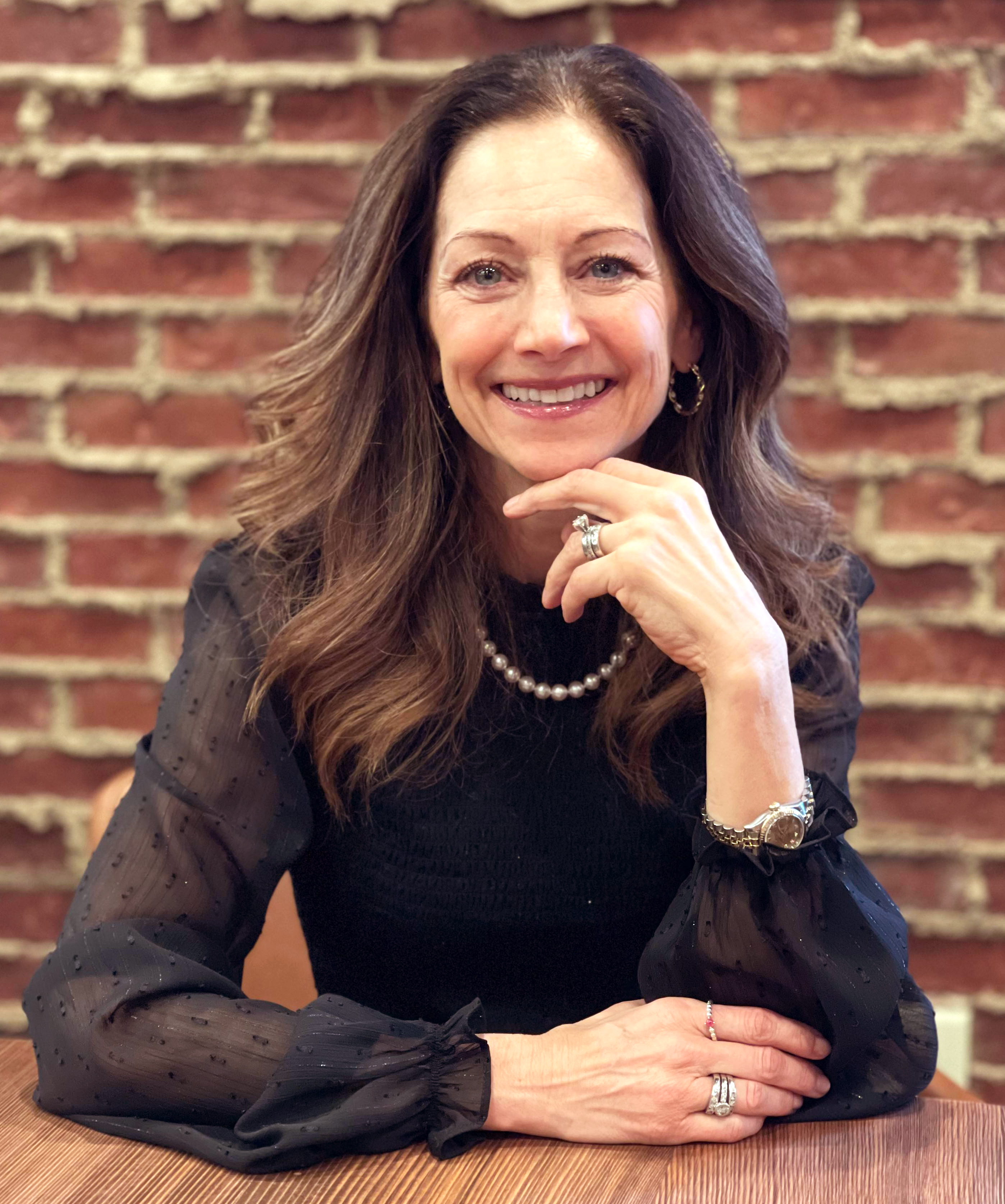
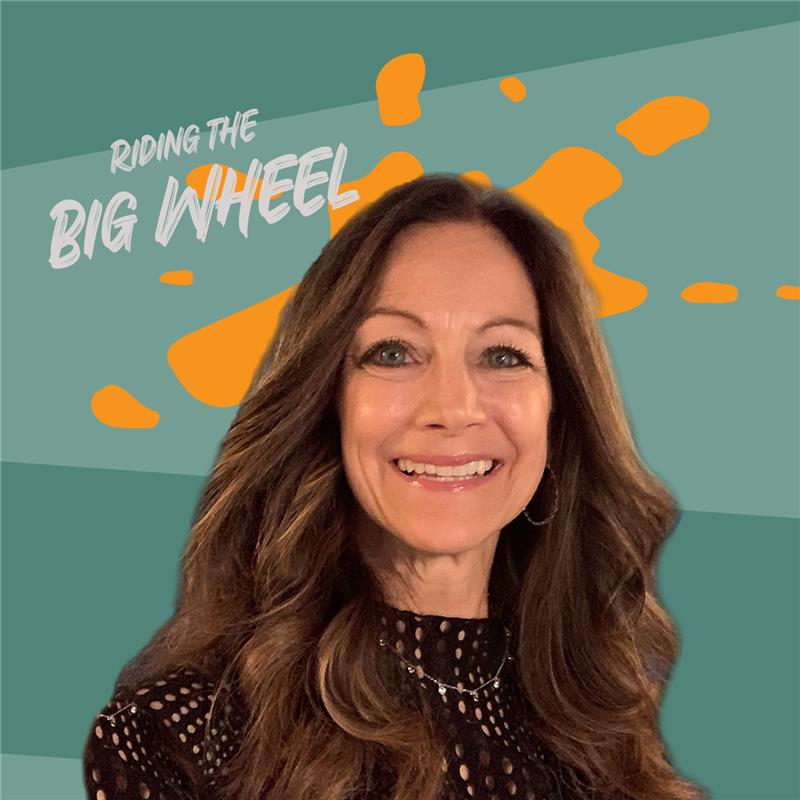
Today's guest is Ivana Echo, co founder and mom in chief of Beautiful Curly Me, an Atlanta based company on a mission to build confidence in young girls through dolls, books, puzzles, and empowering content.
Ivana and her daughter Zoe created the brand after Zoe struggled with confidence and self esteem.
Now Zoe leads as CEO and her mom supports her as together they build a platform designed to help girls celebrate who they are. Builds confidence, and learns self love. The brand operates a social impact model that includes donating a doll to a girl in need for every doll purchased.
Welcome, Ivana.
[00:01:21] Speaker A: Thank you. So exciting to be here with you today, Michelle.
[00:01:24] Speaker B: I know. I think it's just so exciting. I was really looking forward to our podcast today.
And, you know, I found out about you and became interested in you through one of the programs that they have at Emory, and it's the Gozette Gozetta of all things, Impact program, right?
[00:01:42] Speaker A: Absolutely.
[00:01:43] Speaker B: And so I was researching and looking at all of the people that were attending that, and your name stuck out to me, and I kind of researched you because I found out about Beautiful Curly Me.
So that is why we're here today. And I really want to thank you for doing that because what your daughter is doing, it's an amazing story. And I know that, you know, you. You are out there and really she's got a lot of promotion around that story. But I really think that you can never do enough to really promote girls self confidence, self esteem, and really raise awareness to what's going on out there.
[00:02:21] Speaker A: Absolutely.
[00:02:22] Speaker B: Yeah. So thank you for that.
[00:02:24] Speaker A: Thank you.
[00:02:24] Speaker B: So I would love for you to start by just sharing a bit with everyone here, your personal story and that of you and Zoe and what led you to create Beautiful Curly Me.
[00:02:37] Speaker A: All right, so this journey has been very interesting to say the least. So as a new mom of an amazing little girl, I was just, you know, going through the motions and being a, you know, great parent. And one day she came home from school, you know, in tears and asking me, you know, why her hair looked different from her classmates. And, you know, I paused because I just first taken aback, I said, you know, is anyone saying anything strange to you, like, what's going on? And she's like, you know, mommy, they. They touch my hair. You know, they all try to touch my hair and, you know, ask me why it looks different. And, you know, I'm looking around me and everyone's hair looks different.
And, you know, so for me, it's interesting and to take a step back. I grew up in an all black society, so I grew up in Nigeria. And so for me, this was something brand new because I never really felt different growing up. And, you know, compared to my daughter, who was in a predominantly white classroom. And so this really bothered me. And she kept kind of talking about this, and, you know, as a mom, I really wanted to help her. And so I leaned into my village, I called my sister, my mom, and was talking to them to ask them, you know, what could I do to help Zoe feel better about herself. And so my sister actually was the one that suggested, you know, getting her a black doll. She's like, what kind of toys is she playing with? And again, I didn't grow up playing with dolls myself. I was always outside climbing trees. And so Zoe loved dolls. But I realized at that point that I hadn't really been intentional about the kinds of dolls that she was playing with. And she had a lot of gifted toys, and they really didn't reflect her.
[00:04:11] Speaker B: Wow.
[00:04:11] Speaker A: And so, on that advice, I went out and got her a black doll. I started doing affirmations with her.
You know, I would tell her, you know, you're beautiful. Don't let anyone tell you different.
You know, your hair is beautiful. I started wearing my hair natural to also encourage her because that was something else that came out of that, where she pointed out the fact that I, at the time, was wearing extensions because I was trying to fit into a corporate mold of, you know, straight hair, which I know we'll talk a little bit about, you know, with the. The crown hat and these, you know, things. Discrimination against, you know, black women, specifically in the workplace. And so I had also succumbed to the pressures of wanting to fit in. And I didn't realize that that was something that my daughter had noticed and, you know, probably was also affecting her in some way subconsciously. And so a combination of things, me starting to wear my hair natural, me encouraging her, affirming her, you know, just paying attention to the book she was reading and shows she was watching, making sure she was seeing. Seeing characters that reflected her. And this doll she loved this doll. She was so attached. But then she started saying, mommy, why does this doll have straight hair? Why doesn't this doll have hair like mine? And that's when it hit me, because I didn't realize at the time, you know, the dolls in the stores really all just had silky straight hair. They were black dolls, you know, complexion wise, but they had straight hair. And so Zoe kept talking about it and she said, mommy, this doll doesn't have hair like mine. Can we make a doll with braids? Can I make one with curly?
[00:05:40] Speaker B: Ha.
[00:05:43] Speaker A: I couldn't believe it. I'm like, you're six years old. What are you talking about? She's like, I want to make my own. Can we make a business?
And really that.
[00:05:50] Speaker B: She said that.
[00:05:51] Speaker A: She said that. Wow. She said that. And so I didn't take her seriously. She kept pestering and talking about it. When are we going to make my doll, Mommy? When are we going to make my doll? And so one day I said, you know what, you want to make a doll? Okay, let's talk about it. And that's how beautiful curly me really came to life.
[00:06:09] Speaker B: Wow.
So she was pretty young, right? Like seven, I think she was six times. She was six years old. So what was that like? That journey of like. Because now you have to support her.
[00:06:22] Speaker A: Yes.
[00:06:22] Speaker B: And you're thinking about making a doll that, that can be sold, right? I mean, you already had this in your mind. Now I realize you are a marketing professional and you held a marketing leadership position at the time.
[00:06:36] Speaker A: Yes, I did. So I have my MBA from Emory, which is obviously the connection from when we met.
And coming out of Emory, I worked at several organizations. Cnn, Delta. At the time when this happened, I was working at Georgia Pacific, leading marketing for the brands on Amazon and some other e commerce platforms. So yes, I have a solid marketing background, but no knowledge of toy. No knowledge of toy. And that's a whole different business. Right. A whole different industry.
And it was a learning curve for sure. It was a big learning curve. But I think at the time, I don't know that I was thinking, we're going to create a doll that we would sell. I think it was just more of just feeding into my daughter's like, she just kept talking about it. I'm like, okay, let's see what we can make or let's see what we can do. And so we just sat together and we started researching and I just sat her next to me. I'm like, let's see what we can find online. So it was A lot of trial and error, just googling and googling, trying to understand where could you source dolls from, like how, you know, looking at designers on, on some certain marketplaces. So we hired a, a freelance designer and had Zoe, oh my God. You know, kind of express like what she thought the doll should look like, you know, did a like preliminary sketch. And so it was just the process of just trial and error and just a fun thing that we were honestly doing together. I don't think either of us could have fathom that it would turn into a business, to be very honest with you.
[00:08:01] Speaker B: Amazing. Yeah, that is something. So how long did it take to get from concept to production?
[00:08:09] Speaker A: Probably about a year.
[00:08:10] Speaker B: Wow.
[00:08:10] Speaker A: A year of just consistent, like talking to different vendors and factories, you know, working through the design process and then getting samples and going back and forth and not knowing what we didn't know and just trying to figure it all out. So the, the very first packaging looks nothing like this. Like it was, you know, completely different.
But we were excited, you know, and I think just that journey was really beautiful just to see her. Like she really, I could see she was really excited. Like, okay, it's actually happening, you know, this doll's actually happening. And then when the dolls finally came in, you know, I took money out of my savings again. We, we just, we didn't even try to look for investments or anything. It was just a, it was a passion project between myself and my daughter.
[00:08:52] Speaker B: Yeah.
[00:08:52] Speaker A: And so bringing the doll in, the first time, you know, she laid her eyes, it's like, oh my goodness, this is, is actually real.
[00:08:58] Speaker B: Oh my God.
[00:08:58] Speaker A: Yeah, it was, it was incredible.
[00:09:00] Speaker B: So the first set of dolls, I'm very curious about this because I'm an entrepreneur.
[00:09:04] Speaker A: Yes.
[00:09:05] Speaker B: Came from.
So you had the manufactured and I think they were overseas.
So how many dolls did you have to bring in and what, what was your plan? Did you have a plan for what you were going to do with these dolls?
[00:09:17] Speaker A: Honestly? Not really.
Not really. But I knew we would figure it out. I think for me it was very important to make sure Zoe really understood. I mean she was seven years old at the time. Like, how do I make it tangible for her? And so we started doing little like markets. Right. So like little pop up shops. You know, I signed up for a couple. I remember one of the first ones, the Village Market. At the time they actually now have a retail store, but at the time they used to have community pop up events. And so I signed up and I was like, all right, let's, let's Go do one. And we set up a table. Like it was the most ridiculous looking display, but we were just, okay, let's just set it up, you know, had our tablecloth and put it up there and. And let's just see. And so I think for her, that really made it real where she saw like actual customers, like people, not just friends and family that said, oh, this is cute. I'll support you.
[00:10:08] Speaker B: Right?
[00:10:08] Speaker A: Like strangers coming up to the dolls and the little girl saying, oh my God, she looks like me.
[00:10:13] Speaker B: Wow.
[00:10:14] Speaker A: Oh, my goodness. And mommy, I really want this doll. Daddy, I really want this doll. And it was just beautiful. And so we got to like sell the dolls, like, and, you know, see the exchange of, you know, of money for her product. And it really just made it tangible. So it was a small, you know, set of dolls at initial order, I think probably a couple thousand, but small.
[00:10:35] Speaker B: A couple thousand dollars you had to deal with.
[00:10:37] Speaker A: Yeah, because. Because now, you know, when we're talking, we are bringing in like a whole container load. Right. Of, you know, because that's a lot
[00:10:46] Speaker B: of dolls in a container.
[00:10:47] Speaker A: That's a lot of dolls in a container, for sure. So. So I want to say probably the first set was probably about a thousand dolls.
And so just that was a lot of dolls for us at the time, all in our garage, just trying to figure out how to sell through them. But it was very exciting. I think for us, it was just exciting to go through the process of going to these different markets and selling the dolls to people. And then Covid hit, so we had to really focus on E commerce at that point.
[00:11:14] Speaker B: Sure.
So how did that work for you, the shift over to E commerce during the pandemic?
[00:11:20] Speaker A: It was, I would say it was necessary, but it was great. And I think it really helped and strengthened us. So we had a website initially that I, you know, I put together, but we hadn't really been paying that much attention to it because again, I was really focused on Zoe just really getting to meet people and us kind of driving brand awareness in a very grassroots type of way.
And so doing that. Right before COVID hit, we actually did another pop up market. It was ESSENCE that put it together here in Atlanta and actually doing that market. The target buyer, target buyers were in the building. We didn't even realize. And they came by, they chatted with Zoe. They were like, we love this. We would love to invite you up to Minneapolis. And I was like, oh, my goodness, like, we're not ready for this. Like, I didn't know, you know, I didn't like it, but it was amazing. Like, just a testament to the story and the power of the story, and really seeing a young girl creating something that, you know, she didn't have, but she needed and something that would inspire a lot of other girls. And so right after that visit to Minnesota, Covid hit. And so there was obviously, everything was sort of at a shutdown, and so we really had to start focusing on, okay, what can we do to really drive traffic to the website? And so social media became very important at that point. So we used to do different lives and, like, read her bedtime stories, just try to communicate with our audience. And so we just started growing organically that way.
[00:12:47] Speaker B: So she really is the CEO of the company.
And you have been very clear about that. In fact, when we were talking about this podcast, you said, you know, yeah, I'm the co founder, but really, this is her business.
[00:13:02] Speaker A: It is.
[00:13:03] Speaker B: And you have said this from the beginning now. I think it's incredible. She's 14 years old.
[00:13:07] Speaker A: Yes.
[00:13:08] Speaker B: And Target has come out and publicly said she's the youngest CEO to ever launch a brand at Target.
[00:13:15] Speaker A: Yes.
[00:13:15] Speaker B: And I'm sure at so many other places as well, too. So I'd love to get into a little bit, like, how that happened. So now she's 14. Seven years have gone by.
[00:13:26] Speaker A: Yes.
[00:13:27] Speaker B: And you're there by her side. I have watched some video. I've seen her speak. She's pretty amazing. I mean. Yeah. Yeah.
[00:13:36] Speaker A: Proud mom. I am very proud.
[00:13:38] Speaker B: Yeah. Everything to be proud of.
[00:13:39] Speaker A: But yes.
[00:13:40] Speaker B: And she's still your daughter.
[00:13:41] Speaker A: Yes.
[00:13:41] Speaker B: Though. And she still goes through, I'm sure, all the things that young people go through.
[00:13:45] Speaker A: Absolutely.
[00:13:46] Speaker B: So tell me how you help balance and keep her grounded, because that's. That's a tough one. Like, she's CEO running this business. She is the brand ambassador of an amazing product.
[00:13:59] Speaker A: Yes.
[00:13:59] Speaker B: And yet she's still got to go to school, right?
[00:14:02] Speaker A: Yes.
[00:14:02] Speaker B: So tell me how that works.
[00:14:04] Speaker A: It's very interesting. It's a. It's a fine dance, for sure.
I would say from beginning, I've been very intentional about, you know, so with Zoe running the business, you know, from day one, I said, I'm not doing this for you. I'll do it with you.
[00:14:18] Speaker B: Okay.
[00:14:18] Speaker A: And so we made that agreement. And it's like, anytime you don't think this is something you want to do, you have to communicate and let me know. I'm not, you know, we have to make sure we're, you know, always in lockstep. And so Zoe's very passionate about the brand. I mean, just from the get go, you know, creating something from scratch where it's like, you know, you didn't see something that reflected you and now you want to create something and that reflects you and the other 6% of the world that have curly hair. You know, a lot of studies have shown that girls self esteem, you know, starts to drop very early. And so creating that doll as the girl's first best friend, you know, like that buddy, that companion is so important, that representation. And so I think her seeing it and seeing the impact that she created and has, you know, been felt by so many girls really encourages her every day. And so my job as mom is just to continue to support that vision that she has to empower, empower other girls through the dolls. You know, she started writing books when she was 8 years old and you know, she's continued to just pour more and more into other girls. And it also has helped her build her confidence along the way. And so when she's juggling everything, I just remind her, you know, at the end of the day, you're doing your best as a young girl. You still have to maintain, you know, your, your childhood. And I always want to preserve that. So I make time to make boundaries. So, you know, there's time for work, there's time for play, there's time for her to do extracurricular activities. I think it's important for her to have a balanced life. It's not easy. There's always going to be a sacrifice and a push and a pull. So sometimes, you know, when, you know, things are very busy, especially around the holidays, she knows, you know, this is not the time I get to hang out with my friends, unfortunately, till we get closer to Christmas. And now things have sort of, you know, we've shipped out all the dolls and now we can kind of relax. So she understands there's ebbs and flows and there's, you know, ups and downs with every business. And I think it's just been a journey that we continue to learn and evolve. But communication, I would say, is the biggest thing that's very important for both of us to always make sure we're sharing how we feel. You know, if she's tired, you know, I let her rest and you know, we are able to just kind of lean on each other. And now we have a small team that has sort of helped lighten the burden. But in the beginning it was definitely very difficult when it was just us.
[00:16:30] Speaker B: Wow, just the two of you. That's really amazing. It really is just a story that I just thought, think is so incredible.
So what would you say that you've learned yourself about your life and things you've learned about you being the mother of a very young CEO? And what, what lessons have you learned about motherhood and just you and yourself?
[00:16:57] Speaker A: I've learned patience. I think patience has been a big thing.
It's not easy business in general. You have a business so you understand there's just a lot that goes into businesses very demanding.
And I think I've learned that I have to, I have to find time to find myself in the middle of all of this, which has not always been very easy because I'm always very protective of my daughter. You know, she's now in the, in the limelight and I have to make sure she's not taken advantage of. And so it's like your brain is always working twice as hard, if you will.
But I would say patience has been the big thing and just being grounded in my faith has really helped me. Me leaning on my community, you know, I have a very close knit with my family and so just kind of staying keeping her grounded that way as well, I think has been very helpful. We've gotten some good trusted advisors around us and, you know, some small communities of fellow entrepreneurs that really kind of helps everyone sort of, you know, stay grounded and balanced with everything. But I will say for me personally, it's been just patience learning that, you know, you're working with a young child, you know, she's not always going to be. Get everything right every time. And you just have to be flexible. You have to know that, you know, there's going to be ups and downs throughout the journey, but just being patient, I think, has been the biggest thing.
[00:18:17] Speaker B: All right, all right, So I want to talk about the whole reason behind this and we're going to talk about young girls today, their self confidence, self esteem, self love.
And, you know, I actually call it a global epidemic. Yes, truly. And so all girls, you know, white girls, brown girls, black girls, all girls across the world seem to face this. And you and I, I was sharing a story with you about one of my daughters, my oldest daughter and I began to see the impact, the negative impact of social media on her. And it was one evening that I'd walked into her room and she was just crying her eyes out. And she was crying her eyes out. And I'm like, what is going on? You know, her life was good. When she went into her room, well, she realized that she hadn't been invited to a party and all these other people were there. It was a birthday party. And she's like, why wouldn't they have invited me? Like, why wasn't I accepted right now when I grew up? Heck, I wouldn't have even known I wasn't invited to the party unless somebody slipped and said something. Right? Like you don't even know. By the time Monday comes around, everybody forgot about that party anyway, so it's kind of changed things. And then there's the whole Instagram, where you never even know anymore. Now AI has made it even worse. Like what's real and what's not.
[00:19:40] Speaker A: Exactly.
[00:19:41] Speaker B: So I was trying to find a lot of stats. One of the things we discussed is there weren't a lot out there, which that was shocking in and of itself.
And yet we know that there's a dip in girl self confidence that continues to go down as they go from, you know, a young child into adolescence.
Right.
So the some of the stats out there, let's talk about them.
Half of girls Dove Self Esteem Project, a study of more than 1,000 girls from the ages of 10 to 17.
Half of these girls said that social media causes low self esteem. So 50%, I would argue that it's even higher than that probably.
And then. But 90% of all the girls in this study, every single one said they follow at least one account that makes them feel less beautiful.
Right? Less beautiful about themselves, working against themselves. I mean, it almost does. And then there was another study from Girl Guiding, which, you know, I think of that, it's a UK company. We discussed like the Girl Scouts of the uk and they said there was, it was a large study. 60% of the girls in that study from ages 6 to 11 said they had received negative comments about their appearance already by the time they were 11 years old.
And one third of the girls in the entire study said that they lacked self confidence in their appearance. And what we know is that they tracked this and said that it increases with age.
[00:21:15] Speaker A: Yes.
[00:21:17] Speaker B: Now we're going to talk about one other study by the Dove Crown study in 2021. And this was really focused on hair and hair bias. Something that really I didn't even know existed, you know, just never even occurred to me.
A thousand girls ages 5 to 18. 50% of the girls in the study, black or brown, 50% white. And the focus was on hair bias and discrimination. All right.
What we find out is that bias and discrimination starts early.
[00:21:51] Speaker A: Yes.
[00:21:51] Speaker B: It starts as early as the age of 5 years old. And in elementary school so now these girls are already getting negative comments. Comments about their hair.
[00:22:04] Speaker A: Yes.
[00:22:05] Speaker B: Two thirds of the girls, black or brown, attending a white majority school said they experience hair discrimination. And most of this occurred by the age of 12. And 81% of black girls in majority white schools say that they sometimes wish their hair was straight.
[00:22:23] Speaker A: Yes.
[00:22:23] Speaker B: So let's talk about that.
[00:22:25] Speaker A: That is Zoe's exact story. Yeah.
[00:22:27] Speaker B: And this is today.
[00:22:28] Speaker A: Yes, this is today.
[00:22:30] Speaker B: This is what I find so surprising.
[00:22:32] Speaker A: Yes.
[00:22:32] Speaker B: Like I, you know, I think about everything from how we think about ourselves and then women in general, Even women's rights 50 years ago, even in this country. So we've come a long way, but I thought for sure that in this day and age this wouldn't be an issue. But yet it is. So let's talk a little bit about that.
[00:22:53] Speaker A: Yeah, I think it's, it's really sad, you know, every time you hear those stats it's just like, oh my goodness, like there's so much work to be done, it's shocking. You know, I read, you know, even more studies, you know, 7 out of 10 girls feel less than, you know, and the girls confidence and the hair and all of the things. Right. And so we hear this all the time from our customers, you know, who reach out to us and say, hey, you know, my daughter, you know, they tell us these stories, you know, my daughter comes home, she's crying, you know, people are bullying her, they're picking on her, pulling at her hair, things like that. And you know, social media I think has, has, has really been a place where, you know, it's created, you know, monsters of a lot of girls where, you know, girls are, you know, having eating disorders because they're trying to look a certain way and body shaming. And so I think for us it's just, it just reminds us of the importance of what we're doing and how we need to just lean into that and continue to put out empowering content. Because whether we like it or not, parents are letting their kids be on social media more and more because, yeah, they're busy or they just, you know, everyone's, it's a different time. Right. And so this is not a dig at any parents, you know, but you know, I think it's very important that parents should be mindful of what their kids are looking at. They should, you know, there's parental controls for a reason. Even though they need to have devices, you know, earlier and earlier now because of safety reasons or drop offs, etc. I think it's still so important to be very mindful of what your kids are watching and consuming because it really has a negative impact on them. And I think it's important for us, brands like ours to continue to put out positive content to combat the negative content that's out there. And so I think that's what we do. We just try to do our part by, you know, continue to put out, you know, encouraging impactful content for, for young girls and for parents to consume to remind their daughters is the importance of loving themselves early. You know, affirmations. I know we threw that word out around a lot, but is they're so important, they're so effective in the words you speak over yourself really take root and they, you know, you start to embody what you say. And so we start, have to start teaching our kids early the importance of speaking positive words. The importance of embracing themselves, you know, with their quirks, like it doesn't matter.
[00:25:01] Speaker B: Yeah.
[00:25:02] Speaker A: You know, everyone's beautiful. What is normal?
[00:25:05] Speaker B: I mean, really?
[00:25:05] Speaker A: Exactly.
[00:25:06] Speaker B: Yeah, yeah.
[00:25:07] Speaker A: Everyone's beautiful in their own way. And I think as parents, as mom, especially when I think about my journey with, you know, I talked about earlier, my hair, you know, they're, you know, we are mirrors of our, of our kids. And our kids look at us and they observe every little thing we do. And it's pressure, but it's good pressure. And I think it's important for us to always be mindful of the things we say about ourselves because they're listening, you know, we don't like certain things and we, we're verbalizing it, they're paying attention and they're picking up on that. So just being mindful for ourselves as women to always remember to just embrace ourselves and be confident in who we are. Because we're teaching our daughters who are watching us the importance and power of just loving yourself and just being happy and content with who you are. Because you're amazing.
[00:25:53] Speaker B: Yeah.
[00:25:53] Speaker A: Yeah.
[00:25:55] Speaker B: So I will tell you a story because I want to ask you about some advice you might give to parents and even close friends of, of young girls that might be wrestling with self esteem.
So I have a niece and I was up in New York visiting my brother and my sister in law and my sister in law was telling me something that her older sister had said to her daughter and said she's been crying for days. I'm like, what is the deal?
So her daughter has, interestingly enough, very thick, super curly, very full hair, just like this hair naturally, but it's light, it's like dirty blonde. Call It, Right.
[00:26:38] Speaker A: Yeah.
[00:26:39] Speaker B: And her unintentionally, her aunt said, so what are you going to do about your. What are you going to do about your very full, curly hair? Like, did you. Have you learned how to straighten it yet?
And she was like, devastated. And there was a period of a few years that every time I went back, this girl had her hair. I mean, there was a lot of effort that went into this, right into this straightening and doing this to her hair. And, and fast forward to today.
She wears her hair naturally and beautifully and it looks great and it's long and you know, she's a mother and her daughter has hair just like hers. Her daughter is, like, young and she's got all the curls and so does her husband. Her husband's got curly hair. It's really interesting. We talk about them and say, okay, wait, you look at a baby picture of him and a baby picture of her, and they look the same person with their curly hair.
So this caused a lot of hurt and harm, this unintentional, you know, comment that this aunt made. And like, what language, you know, what is it that people do unintentionally and what language kind of helps when they're. They're struggling with self esteem or, you know, what are things that people just need to not say.
[00:27:53] Speaker A: Right.
[00:27:54] Speaker B: You know, when someone's different.
[00:27:55] Speaker A: Exactly.
[00:27:56] Speaker B: It could be your hair, could be anything else.
[00:27:58] Speaker A: Right, right. I think there's a lot of unintentional, you know, unfortunately. And I think that's why we're trying to teach kids early, like even giving aside, we say every child should have a black doll because I think it's important that kids have toys that reflect the world around them. And so instead of going to try to touch your classmate's hair, you can touch this one and like, get to know it. And because this is very much mimicking natural hair, you can actually wash this doll's hair and all of that. Right. And we made that intentional because we want girls to celebrate and enjoy the experience of, you know, learning how to care for their hair, you know, using the doll as a proxy. But the unintended consequence of that too is also, you know, other kids of other races, other, you know, girls and boys of other races can start to have empathy and understand what other, you know, hair, you know, is like, without having to go be invasive and try to touch an actual human being's hair, which.
[00:28:52] Speaker B: Weird.
[00:28:52] Speaker A: That's very.
[00:28:53] Speaker B: Yeah, it's just for.
[00:28:54] Speaker A: For exactly. So I would say, but even, I think on both sides. Right. So unintention People shouldn't say things like, you know, your hair is tough. Like, I think mothers, even black moms that are, you know, it's time for wash day. Sometimes we make it a big deal. Bigger deal than it is, right? Because it might be a lot to deal with, quote, unquote, right? Maybe your child has a very full head of hair. But the right thing to say is, you know, this is an exciting time. We get to care for your hair. You know, let's wash it, let's get all the gunk out and let's, you know, make it cute for. For next week. Right? Versus saying, oh, my goodness, this is so much hair. Like, you know, you start to make the child feel self conscious. Like, what's wrong with the fact that I have so much hair? Or it's so tough to comb? Or, you know, things like that. Right? So I think we unintentionally project, you know, it comes from years of, like, maybe you had trauma when you were coming up where, you know, the straightening process is very painful. And, you know, back then, people tried to fit into the molds Society, you know, pressured us into thinking straight was better. And then you will go through using relaxers and burning your scalp and doing all these things just to fit in when our own hair is beautiful. So I think we have to unlearn those things and those words as. As, you know, black women, black and brown women. But I think every woman or parent in general that's caring for a child with hair that's maybe not like theirs or textured hair should just use positive words. I think that's just the bottom line is use positive words.
Always say things like, you know, your hair is beautiful. You look beautiful just the way you are. You know, oh, my goodness, I love this. You know, it's curly, it's bouncy, it's, you know, whatever the thing is, right? And so even if it takes a longer time, it means, you know, there's that much love that gets to be put into it. And I think it's just about reframing how we see things.
And honestly, it's. It's a learning journey for everyone. There's a lot of resources out there. Even Dove, you mentioned they have a whole, you know, plethora of resources that they are sharing because they're really passionate about, you know, helping everyone help other people feel better about their hair. And I think that's something that we, as beautiful curly Mia are also working to do is, you know, how do we empower our community to Champion our girls to celebrate, you know, the natural hair and the, you know, everything about them that makes them special.
[00:31:13] Speaker B: So I think about the role of teachers, coaches, you know, people that. That children are in contact with. It could be their Girl Scout or Boy Scout. You have a niece, I think, in Boy Scouts now, right. Who their instructors might be. And they can also intentionally say things, or maybe even intentionally say things that are harmful and hurtful.
Do you find. I'm going to ask you a question here that men or women are more or less sensitive to those conversations or what they may say to girls?
[00:31:54] Speaker A: I would say it depends. So I think if. If a man has.
Is a father of girls, he probably feels a little bit, you know, he's probably more sensitive to the needs and wants of girls versus maybe a boy dad. But that's just obviously generalization.
[00:32:07] Speaker B: Yeah.
[00:32:07] Speaker A: I think everyone, you know, needs to always try to be more emotionally intelligent. And I think we learned that from just opening up our worlds and talking to more people and people that don't look like you and learning their experiences. I think that all makes us all better humans in general. Because from, you know, talking to you today, I've learned so much about your background, like, things I wouldn't even have known. Yeah, right. And, you know, we make a lot of assumptions as we go through life because, you know, we think, oh, someone doesn't look like me. They might not have had a certain experience, whereas they might even had more experience, you know, than you have in a certain area. So I think it's usually just about us coming together as human beings and understanding each other and just being kind to each other. I think kindness is something that we don't talk enough about, but just teaching our kids to be kind and think about yourself. And how would you feel if someone said that to you? Yeah, I think as parents, if we can instill those values in our children, we just make everyone better. And honestly, if we listen to each other more and we're kind to each other, even if someone says something offensive, you always want to assume positive intent. And then it can be a teaching moment where you're like, okay, wait, this is how this made me feel. And this is why, you know, this. You shouldn't say things like that. And I think that's what I try to, you know, I have tried to teach my daughter growing up. You know, it's like, you have to be kind. You have to always know that people don't know. They're ignorant sometimes. And you use that moment, someone makes a weird comment about you. To educate them and tell them. No, you know what?
No, this is. This is how this is. Right. And so I think we just. It's a learning process, but we just have to teach our kids to be kind. I think as adults, we have to remember kindness as well.
[00:33:43] Speaker B: Yep. Kindness. Which can be hard sometimes as a parent.
[00:33:48] Speaker A: Yes.
[00:33:48] Speaker B: Oh, man. Sometimes when you're like. Yeah. Because sometimes the kids can be tough.
[00:33:52] Speaker A: They really can be. They really can be.
[00:33:55] Speaker B: So I want to get into a little bit about what you guys do, what the company does, what Zoe does to really give back and support this. But first, can we look at the dolls? Yes, absolutely. So I thought this was really interesting because you said, which I didn't notice, but this gorgeous thing. Now, do they have names or.
[00:34:14] Speaker A: Yes. Bella. Bella.
[00:34:17] Speaker B: She is. Bella is beautiful. These eyes are unbelievable. I noticed that right away.
But you said you can wash their hair.
[00:34:23] Speaker A: Yes.
[00:34:24] Speaker B: So what do you wash it with?
[00:34:25] Speaker A: Just regular shampoo, regular products.
[00:34:27] Speaker B: She's beautiful. So she's Bella.
[00:34:29] Speaker A: Yes.
[00:34:30] Speaker B: And then we have, like, Benza.
[00:34:35] Speaker A: Yes.
[00:34:35] Speaker B: Oh, my God, that's cute. The scientist.
[00:34:38] Speaker A: Yes.
[00:34:38] Speaker B: Benza. That's a very clever name.
[00:34:40] Speaker A: Yes.
[00:34:40] Speaker B: Super cute. And she's got cute.
[00:34:43] Speaker A: She has cute curly hair as well. Same hair. This is Amara. So there's this. These are the curly and confident crew. They're all about helping girls celebrate their passions and things they're interested in. So the love for stem and steam and.
[00:34:56] Speaker B: Love that.
[00:34:57] Speaker A: Yes, yes. Because, you know, we want girls to know that they can do anything and be anything.
[00:35:01] Speaker B: And that's right.
[00:35:02] Speaker A: You know, they're not one dimensional. And you can love science, but also love art. You can, you know, you can do one or the other. We don't have to be put into little boxes. I think that's part of confidence is like knowing that, you know what? I can show up in any space and I can shine just the way I am. And so we try to teach that through the dolls, but then also through the books, the puzzles and. And some of the content that we're starting to put out. So it's just incredible. It's incredible.
[00:35:27] Speaker B: Yeah. I love this. So I see a puzzle, and then you actually gave me.
[00:35:33] Speaker A: Yes. Zoe's. Noah's journal.
[00:35:35] Speaker B: I know this journal. My confidence, my superpower. And it's a self love journal.
[00:35:39] Speaker A: Yes.
[00:35:40] Speaker B: And, you know, I think that the whole message behind this. It's lovely. This is a great journal. Is that you're never too old.
[00:35:47] Speaker A: Never too old. Right.
[00:35:48] Speaker B: To become more confident.
[00:35:50] Speaker A: Absolutely.
[00:35:51] Speaker B: And to become more super and powerful.
[00:35:54] Speaker A: Yeah.
[00:35:54] Speaker B: So I'm kind of excited about. I, I'm gonna use this myself.
[00:35:58] Speaker A: I love it. You have to let me know how you like it.
[00:36:00] Speaker B: I will.
[00:36:00] Speaker A: Daily prompts, it's like reminding you to what you're grateful for every day and like, you know, affirmations daily. And then there's little lessons in there and challenges.
[00:36:09] Speaker B: Yeah, it's really wonderful. So let's talk a little bit more about what Zoe does and what the company does to really get involved in the community and to give back. Because we talk about, you've got this whole social impact mission, which is a big part of why the company is. So let's talk about the different things that you do.
[00:36:29] Speaker A: Yes. So from day one, Zoe said, you know, I don't want any girl to feel the way I felt, you know, at 6 years old, not loving myself, not loving my hair and having those selfish challenges. We've talked through the stats today. It's, it's really disheartening to know that girls confidence is at an all time low and there's a huge gap and we have to do our part to fill that gap. And so to whom much is given, much is expected. And so I think for us from day one, I've always tried to instill in her the importance of giving back and the importance of community, the importance of the fact knowing that you're, you know, whoever you are, there's someone else that could be less fortunate and what can you do to, you know, meet them where they are. And so it's part of that mission. We call it dollsgiving. We give dolls back to girls in need. Underserved girls in underserved communities. Title one schools. You know, we partner with a lot of different organizations, foster care, etc. To make sure every girl has a doll that reflects her, that represents her, makes her feel good about herself. And so for every doll that's purchased on Beautiful Girl, we give one to a young girl in need. And that's something that we started from the beginning and it's just a big part of what we do. And so beyond the books, you know, Zoe goes to schools and does story time and reads her books and we give books away as well. And it's really just about empowering the next generation of girls so that they be confident and know that they can do anything. And it starts with the toys that they're playing with at a young age.
[00:37:51] Speaker B: And I do believe you can do. Isn't there some kind of a corporate sponsor program as well?
[00:37:56] Speaker A: Yes, there it is. What Is that so companies are able to sponsor a certain number of dolls or, you know, a classroom or however we want to structure it. But yeah, they're able to sponsor dolls that are at cost essentially to give back to the community. So we can give back to nonprofits that we partner with or with nonprofits that they partner with. But essentially the dolls go back to girls in the communities that need them the most.
[00:38:22] Speaker B: That's pretty incredible. And you were recently sharing with me, which I thought was really unbelievable, what you're doing to help young people.
[00:38:32] Speaker A: Yes.
[00:38:33] Speaker B: Who are going into their own business.
Let's talk about that.
[00:38:37] Speaker A: Yeah. So along the way, you know, a lot of moms and dads will come up to me and say, I love what you're doing with your daughter. My, you know, my child has a business idea. I would love to, you know, I just don't know where to start. And Zoe on the other side, you know, felt a little bit lonely, you know, starting this business journey because a lot of times she'd be in, you know, meetings and rooms with me and it's all adults and then it's her. Right. And so it's like, where is the space for us young entrepreneurs? And they're out there. So we really wanted to create this community for young people to come in, you know, have this community of other fellow, you know, like minded youth who are interested in starting businesses, who already have businesses so they can learn from each other and then obviously provide mentorship and coaching for them so they can thrive. So it's called Youth Me Business. It's a nonprofit arm of Beautiful Curly Me we established two years ago. And it's really about creating an ecosystem for youth entrepreneurs between the ages of 11 to 17.
[00:39:35] Speaker B: Wow.
[00:39:36] Speaker A: Those are very underlooked. Like no one really takes them seriously. And it's important to take them seriously because they have great, brilliant ideas. I think Zoe is a testament to the power of believing in our young people and pouring into them. And so we provide them coaching, mentorship, community and capital.
Capital. Very important because you can't run a business with no money. So we give grant funding to help them grow their businesses so they can scale them and impact their communities.
[00:40:04] Speaker B: Wow. So how do people find out more about all of these? Can they go to Beautiful Curly Me or how.
[00:40:10] Speaker A: Yeah. So Beautiful Curly Me for the products, for the content for Zoe. Beautifulcurlyme.com and we're on all social media platforms and a youth mean business is youthmeanbusiness.com you can find out more information about our Summit that's coming up this summer, our youth annual accelerator that we have for youth entrepreneurs where we bring them in, we pair them with mentors, and at the end of the week we give them grants to go continue to grow their businesses. So that information
[email protected] I think that is amazing.
[00:40:41] Speaker B: It is unbelievable. So when we think about the journey of these young people. I want to go back to your daughter and let's talk about how you actually transition that business. So you were doing all these markets, I mean really this was a grounds up approach, right.
And you were having products shipped to your home and it was in your garage and inventory and all that stuff. And I can, I can completely relate, believe it or not, because I did own a retail business for.
[00:41:09] Speaker A: That's right.
[00:41:10] Speaker B: For some time. So how did that all happen? Like the transition into retail?
What was that journey like and what were some of the obstacles and the things that you, you did to kind of get there?
[00:41:22] Speaker A: Yes. So we started off like you said, very grassroots. And as the business was growing, it really was very organic. So just storytelling. So we're sharing our journey. You know, we started, you know, getting online on social media and so it just started growing and evolving. And during COVID it was a big outburst of support for black owned businesses, you know, with the George Floyd and all of that. So there was almost a light shone on black owned businesses at the time. And so that really helped kind of explode the growth of the company at the time, you know, for a very unfortunate purpose obviously.
But I would say that immense support for black owned businesses really helped sort of start to create more awareness around the brand. And Zoe just telling her story and so she started to get a lot of media attention. Again, very organic. And so as we were growing, we obviously grew out of our space and so we ended up moving into a warehouse and just the business has just been growing brick by brick, you know, slowly and surely. And then when I mentioned we met the target buyers the first time at this pop up event, so we went up to Minneapolis and then Covid hit. So that kind of. There was a lull there. And then we came back and just kind of kept in touch with them and talking to them about, you know, what it would look like to potentially launch in retail.
And so we took all those meetings and Zoe, believe it or not, led the meetings.
[00:42:43] Speaker B: Wow.
[00:42:44] Speaker A: She pitched the buyer the first time. She was 10 the first time. We pitched the Target buyer the first time. I would say it didn't, it didn't work. Out. The buyer loved her, love the story. But the product wasn't right. The price point wasn't right. And so we came back to the drawing board and talked about, like, what would it take to get into retail? We needed to strengthen our supply chain. We needed to look at the operations. We need to figure out money, you know, funding, and all of these different things. And so for young girl, that was a lot for her to absorb.
[00:43:13] Speaker B: A lot.
[00:43:14] Speaker A: It was a lot. But, you know, we had some. Some really good conversations, and we had some advisors kind of give us input on, you know, where they felt the business could go. And so I would say just a journey of faith and just continuing to work through the different details of finessing the product. And then the. The plush dolls actually came out of that. So we looked, you know, we went into the stores and we identified a white space where, you know, plush dolls, but actually fashion plush dolls with actual hair and. And the features that, you know, were different. So it was a little bit of a different product for Target and for mass retail in general. And so, you know, Zoe had this great concept of, you know, we should create this line of dolls because she has idea for a story, an animated content series. And so create this line of dolls that really explore. Teach girls to explore their passions and teach girls to, you know, know that they can do anything. And so that's sort of how it came out of just kind of brainstorming and thinking through, like, what could work for retail. And so we came up with this plush doll concept and then pitched it to the buyer the second time, and she absolutely loved it. And so Zoe pitched the buyer herself.
Buyer loved their price point, worked a lot better.
And then we just started the journey of trying to figure out where to get the money from to get into retail. And we realized it was very difficult.
[00:44:34] Speaker B: Wow.
[00:44:34] Speaker A: Very difficult. But we got some great partners with Invest Atlanta Ace. There are a few community organizations that give funding to small businesses here in Atlanta. So we worked with them to help fund the very first purchase order for Target. And so we launched in Target 2024 summer. Yes. I think Zoe was 12 new. It's still very new.
[00:44:55] Speaker B: She's just a.
[00:44:56] Speaker A: Yes. 12 years old.
[00:44:57] Speaker B: Adolescent.
[00:44:58] Speaker A: Wow. Yes. So very exciting moment, very proud moment to launch. See her, you know, her products on shelves. And I think it's just a testament to tenacity, resilience, hard work, being told no the first time. But coming back and trying to figure out another creative way to get in the door. And I think for this is very important because it really establishes a bigger platform for beautiful Curly and me. Because, you know, selling E commerce is great, but then when you have your, your products on shelves next to the billion dollar brands, it makes a statement and people see it and then people get to learn more about the brand and they're inspired and girls can, you know, there's that instant, like immediate, you know, instant gratification they can get from pulling the dolls right off the shelves.
[00:45:44] Speaker B: So what would you say? I mean, I'm also an entrepreneur.
[00:45:48] Speaker A: Yes.
[00:45:49] Speaker B: And I'll tell you that even though none of us like failure.
[00:45:52] Speaker A: Yes.
[00:45:52] Speaker B: It happens.
[00:45:53] Speaker A: Yes.
[00:45:53] Speaker B: Right. So through that, I had someone tell me once, a very wise woman said that it's not really what, that you fall down, everybody falls down. It's what are you going to do when you get back up. Right. So it sounds like you had a lot of resilience, curiosity also and understanding how it could be possible.
You know, so there's funding out there, there are resources out there. People just need to keep looking and not give up.
[00:46:24] Speaker A: Absolutely. I think we underestimate the power of community.
And just, you know, when we first started, it was just us, we didn't know anything. I think tapping into like industry organizations for us, for instance, women and toys was one where it's like, okay, wow,
[00:46:39] Speaker B: I didn't even know there was women in boys.
[00:46:41] Speaker A: Industry organizations that, you know, provide you that community of support where you can ask questions, where you can learn, where you can, you know, get like contacts to really help further your business. The Russell Innovation center for Entrepreneurs is another one here in Atlanta. You know, we end up getting office space there and it's just community. That's all about building black business. And so we, you know, got, you know, connected with corporate partners and just other fellow entrepreneurs to really, you know, again, just to. It's lonely, right, being an entrepreneur, but really just for. To get that support, get advice, get potential connections and just get the knowledge that you need and potential funding to help you with your business. So I think for us, what I've learned is every door has opened another door and it's really just about continuing to try and don't give up. When one door closes, something else will open and just not being afraid to ask and not being afraid to speak up. Like, use your networks, use your, you know, LinkedIn. Yeah. Use, you know, the connections that you've built over the years.
And you know, what we know now is what we're trying to pour in to help the other youth entrepreneurs that are coming up because you Know, it's definitely a very difficult journey, but it's nothing is impossible. I think we all have what we need to thrive. It's just a matter of really looking around us.
[00:48:02] Speaker B: Yeah.
[00:48:03] Speaker A: And really just trying to figure it out as we go along and not being afraid to fail, but just continuing
[00:48:09] Speaker B: to, to push forward, stay in that path. So you said a few things that I think are really important.
The one is the power of a network, the power of community and people that can hold you up. And it sounds like in your case you also have a really good power of family. Right. Family, friends, community, networking, resilience and not giving up.
Yeah, I think it's pretty amazing actually.
[00:48:39] Speaker A: It is.
[00:48:39] Speaker B: So I wish you all the success.
I know, I mean, I'm really interested to see what's next because really she's 14.
But let me just ask you, as we're kind of wrapping up, I wanted to talk to you about this.
[00:48:54] Speaker A: Yes.
[00:48:54] Speaker B: You mentioned an animated series or something.
[00:48:57] Speaker A: Tell me about this.
Like this.
[00:49:00] Speaker B: This daughter of yours is so creative.
[00:49:03] Speaker A: She's creative. I have to keep up with her. Sometimes I'm like, hold on, we gotta take it step by step. But yeah, she again, I am. Her biggest vision, right. Is, you know, starting off like purpose wise is really about empowering girls to do whatever their big thing is, right. So confidence to do their big things so they can achieve the highest potential. And so as part of that it's like, okay, what's our big goal? And so we talk about this all the time. And one of our advisors, you know, has this really great framework, his name is Jeff Hillemire. It's called pvtv. And it's purpose, vision, tenets and values. And so it's like for every body actually everybody should have their personal pvtv. So Zoe and I have actually worked through what our personal one is and then what it is for the businesses that we run. Right. And for the organizations. And so starting with your purpose and then your vision, like your big vision and then like the three year vision and then going into like the tenets is how you actually achieve that vision. And the values is kind of like what drives you. And so one of our values is actually fill up. So it's like how do you keep failing and trying and trying again but failing fast so that you can keep learning.
But yeah, her big vision is, you know, how do I empower 10 million to. Oh, how do I empower 10 million girls over the next five years? Like that's so huge. So the only way we can get there is through like obviously a big push. So not just products, but mass media content starts to really play a big role. And so she has a really great idea for an animated series called Bellamy's Business and it's really about Bellamy's Business. Bellamy's Business and is really teaching girls the power of curiosity, problem solving and just like not giving up. And so, so she's been working on that. So that's something that we're working through to, to bring to life hopefully very soon.
And then through our giving back initiatives. Right. Continue to give back more. So how do we continue to accelerate that and then through like content for school, so entertainment and like thinking about
[00:51:00] Speaker B: how she just came out with a
[00:51:01] Speaker A: course selling and curriculum like sel based content curriculum that's going to be selling into schools. So that's another way to reach people faster and further to really achieve that big goal.
[00:51:11] Speaker B: Wow. She is a lot to keep up with.
[00:51:13] Speaker A: She is.
[00:51:14] Speaker B: That is so incredible. I got to tell you. It's.
[00:51:16] Speaker A: She's still a very normal kid. She plays tennis.
[00:51:19] Speaker B: Really?
[00:51:20] Speaker A: Yes. Yeah. She's on her school's tennis team. She loves to play tennis and she likes to hang out with her friends and be a normal teenager. She's in the ninth grade now, so it's, it's a lot for her to juggle. But I think team is very important and I think we've. We're so grateful we have a small team that helps us and community, like I mentioned, and using the power of technology to make things more efficient in this world of AI that we live in. Right. Yeah. But, you know, just again, I think not trying not to bite off more than we can chew and just doing the best we can every single day to further the mission. And you know, everything we look through that lens of, you know, is this going to help us with our mission of empowering girls and, you know, making sure we're very focused on that.
[00:52:04] Speaker B: Wow. Well, I am really excited to continue to follow that journey.
[00:52:09] Speaker A: Thank you.
[00:52:09] Speaker B: With you. Yeah. Thank you so much for being here today and sharing your story.
And for those that are listening today, if you have been touched by this episode, my ask is that as you think about the young girls in your life today, if they could use any type of confidence boost, just give them a good conversation today. Right. And give them a positive affirmation and tell them that they are beautiful, they're worthy. So. And they are worthy.
So again, beautiful. Curly me.
We will have in our show notes how you can get a hold of Ivana directly and how you can get a hold of or learn more about the program that they have. And thank you so much for sharing your time with us today.
[00:52:54] Speaker A: Thank you, Michelle. It's a pleasure.
[00:52:57] Speaker B: Run toward the unknown.
When you're riding the big wheel, you're not alone.